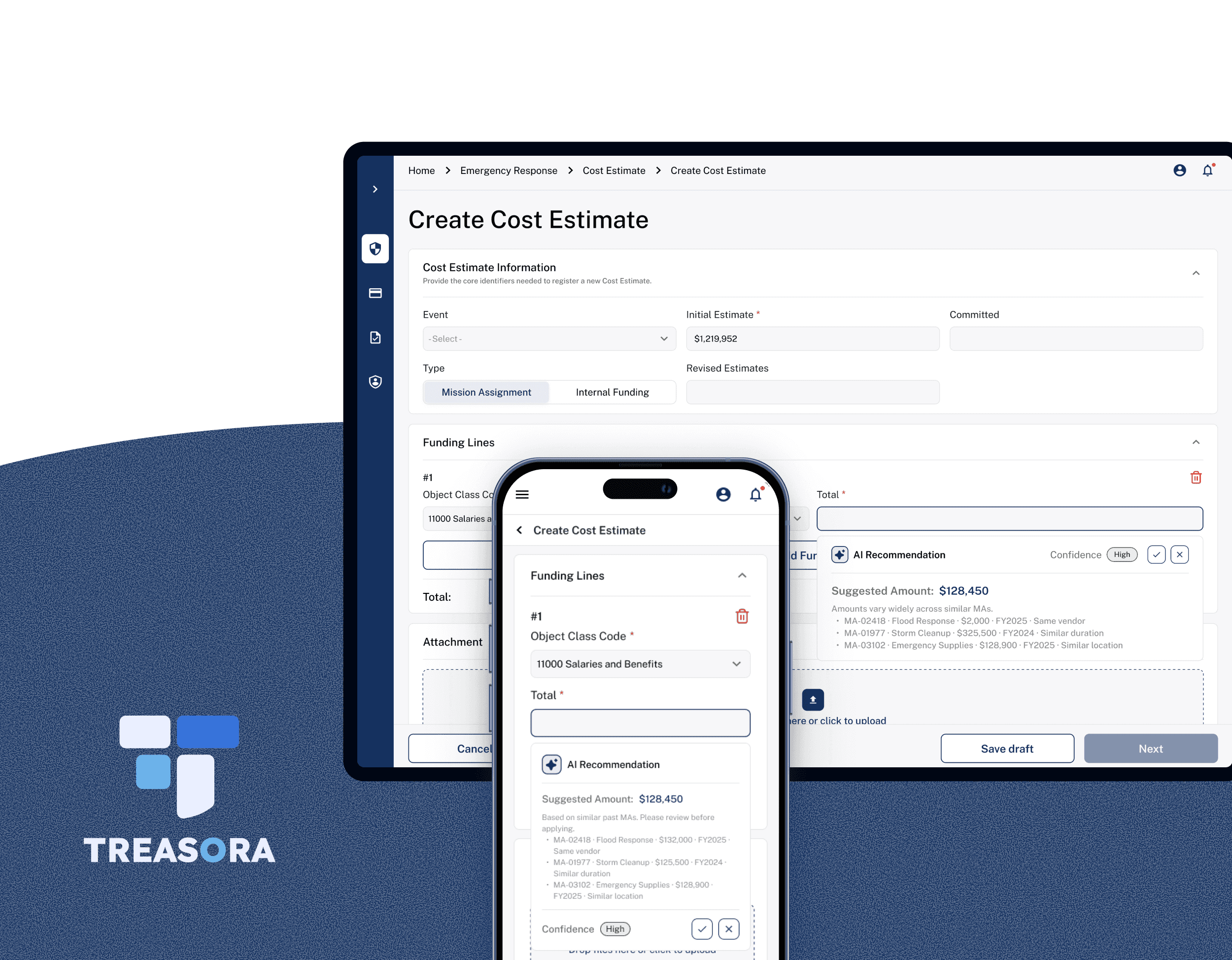
Treasora: AI-Powered Financial Management for Emergency Response
An enterprise platform leveraging AI-assisted decision support for budgeting, approvals, cost estimation, and transaction workflows in high-stakes emergency operations.
Role
Role
Role
Product Designer · Led AI-assisted interaction patterns, and design system development (desktop & mobile)
Timeline
Timeline
Timeline
Sep 2025 – May 2026 (9 month)
Team
Team
Team
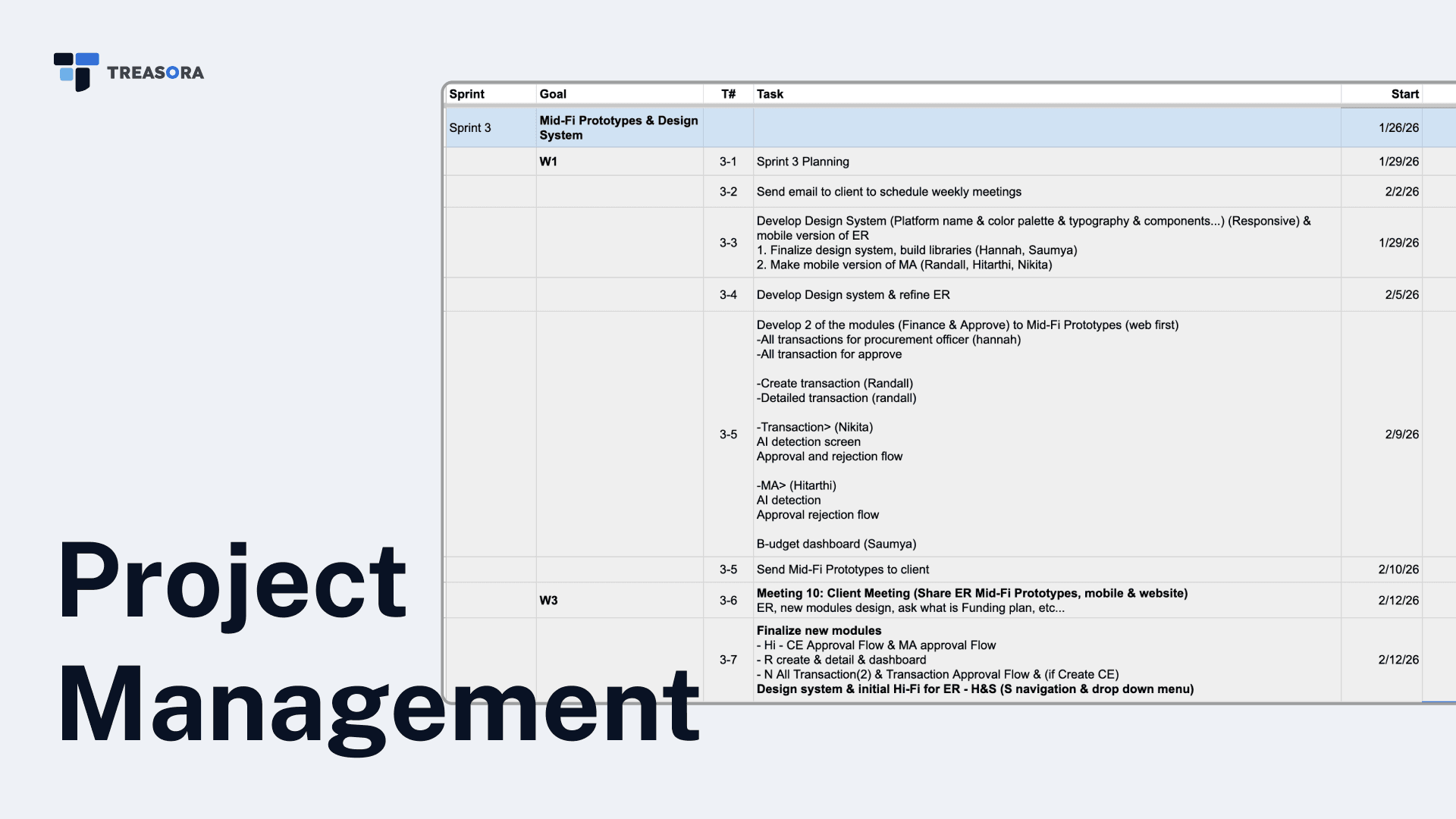
3 Product Designers, · 1 UX Researcher · 1 Project Manager
Focus
Focus
Focus
Multi-role workflows · Financial approvals · AI-assisted decision support · Cross-platform systems


1. Impact & Outcomes
4.8 / 5
4.8 / 5
Users rated the experience highly in usability testing
~50% ↓
~50% ↓
Reduction in task completion time
High AI Adoption
High AI Adoption
Users actively relied on AI for cost estimation and decision support
End-to-End Workflows
Designed 19 end-to-end workflows across desktop and mobile
Design System
Design System
Built a scalable cross-device design system with 40+ reusable components
1. Impact & Outcomes
4.8 / 5
Users rated usability highly in usability testing
~50% ↓
Reduction in task completion time
High AI Adoption
Users actively relied on AI for decision support
End-to-End Workflows
Designed 19 end-to-end workflows across desktop and mobile
Design System
Built a scalable cross-device design system with 40+ reusable components
2. My Contribution
2. My Contribution
In a team of five, I led the end-to-end design of Treasora’s core workflows, AI-assisted interactions, and scalable design system.
Design Systems & Interaction
Workflow & Product Strategy
Leadership & Collaboration
Built and maintained a scalable cross-platform design system with 40+ reusable components, enabling consistency across complex financial workflows on desktop and mobile.
Color
Typography
Layout
Navigation
Forms
Feedback
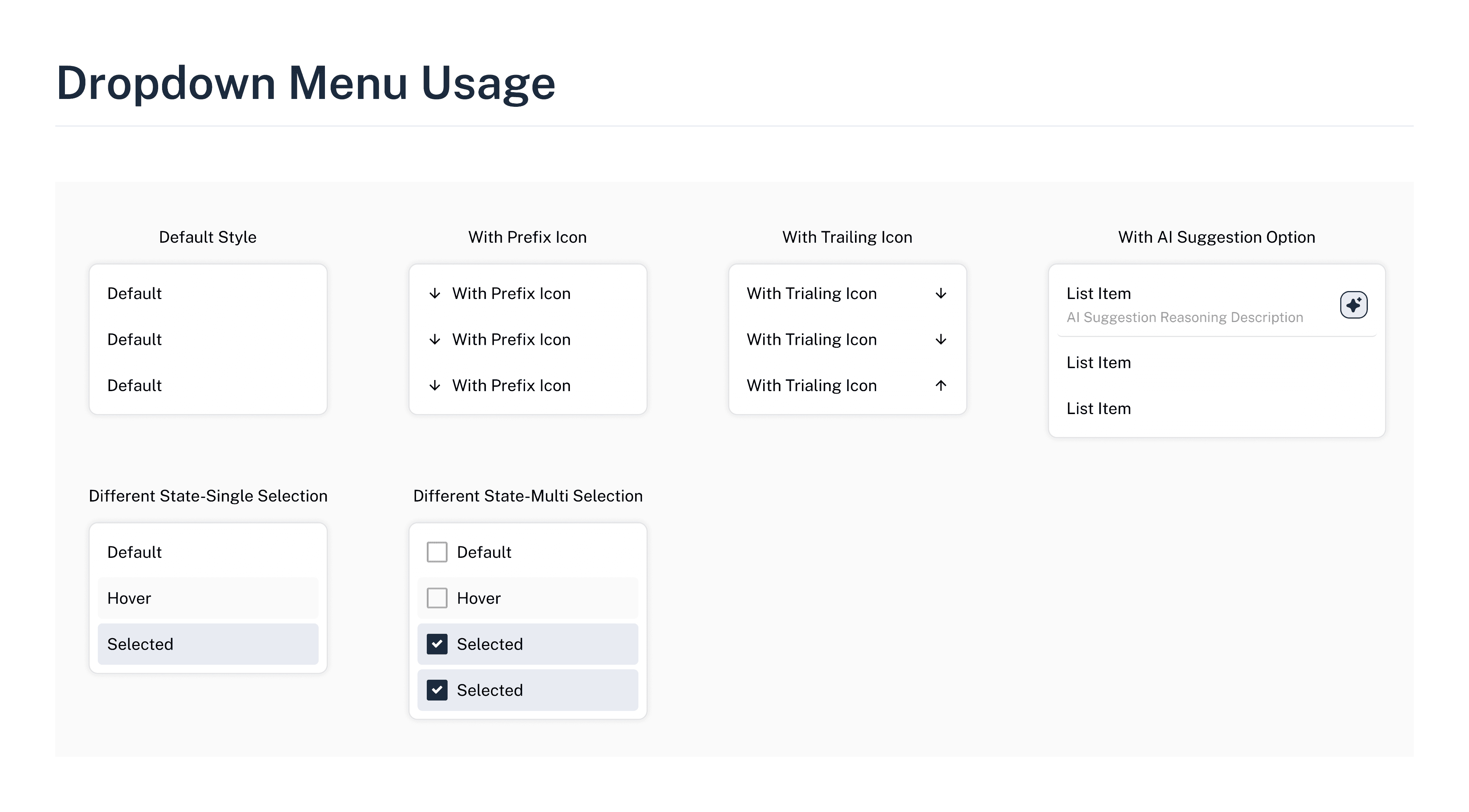
AI Pattern
Interaction Guideline
UI Spec


Design
Strategy
Leadership
Built and maintained a scalable cross-platform design system with 40+ reusable components, enabling consistency across complex financial workflows on desktop and mobile.
Color
Typography
Layout
Navigation
Forms
Feedback
AI Pattern
Interaction Guideline
UI Spec


2. My Contribution
In a team of five, I led the end-to-end design of Treasora’s core workflows, AI-assisted interactions, and scalable design system.
Design Systems
Workflow & Strategy
Leadership
Built and maintained a scalable cross-platform design system with 40+ reusable components, enabling consistency across complex financial workflows on desktop and mobile.
Color
Typography
Layout
Navigation
Forms
Feedback
AI Pattern
Interaction Guideline
UI Spec


3. Project Overview
3. Project Overview
Treasora is an AI-assisted financial management system designed for emergency response, helping organizations manage complex workflows, approvals, and funding decisions under time pressure.
TREASORA
TREASORA

01 Client
01 Client


This project was developed in collaboration with PFF, LLC, a team specializing in government financial management systems.
02 Problem
02 Problem
In emergency scenarios such as hurricanes or natural disasters, government agencies must quickly allocate funding, estimate costs, and navigate multi-step approvals under intense time pressure.
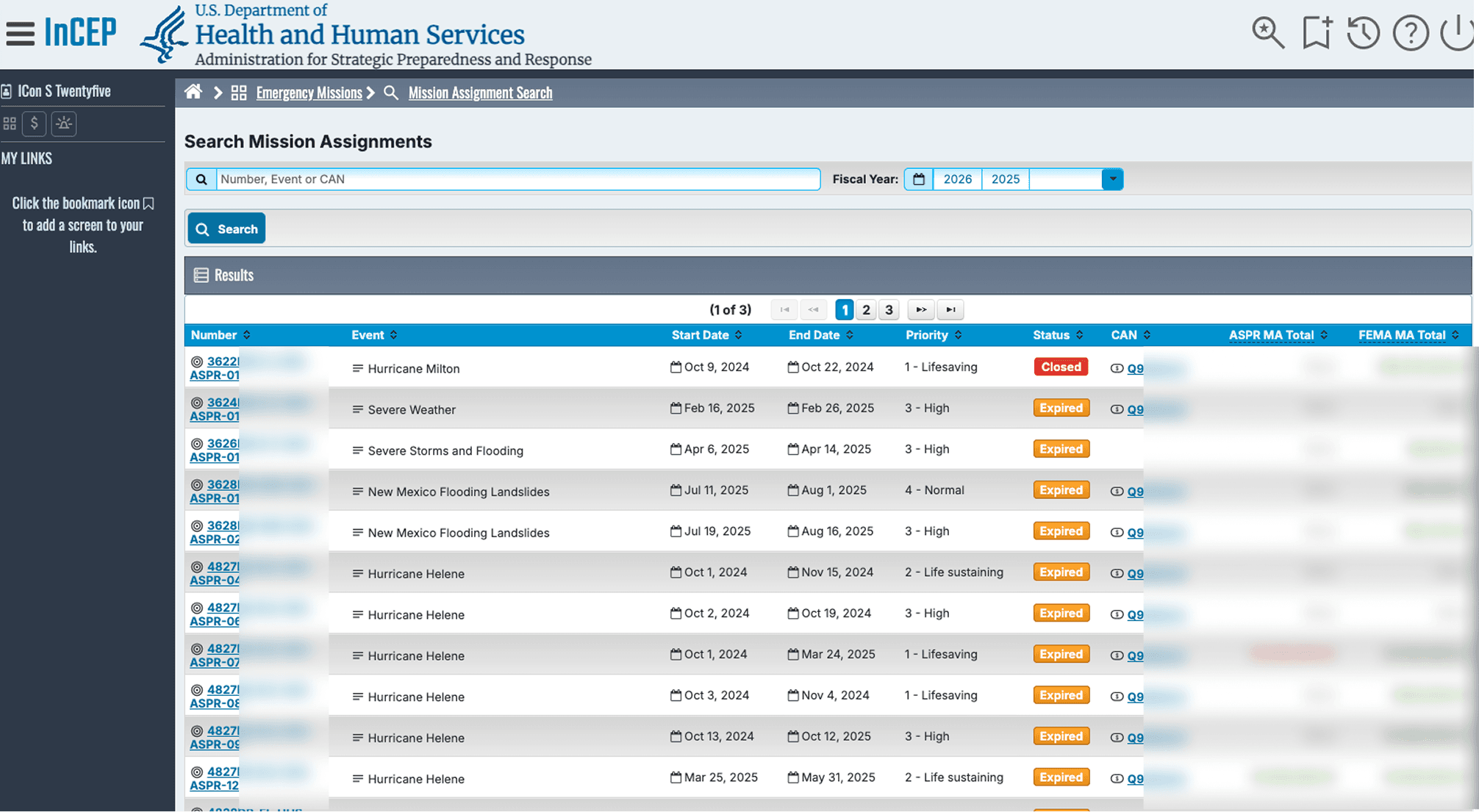
The existing system, InCEP, was developed by our client for a specific federal agency (HHS). While functional, it was complex to navigate, required a high learning curve, and was tailored to a single organization, making it difficult to scale or evolve into a broader, productized solution.

03 Opportunity
03 Opportunity
Recent policy shifts are decentralizing emergency management responsibilities from federal agencies like FEMA to state and local governments.
Previously, organizations relied on FEMA to manage funding, validation, and financial tracking. Now, state and local agencies must estimate costs, manage budgets, and justify spending more independently.
This shift creates an opportunity to design a scalable financial system that supports emergency operations at the state level.

04 Goal
04 Goal
The goal was to transform a highly specialized system into a scalable product that supports diverse organizations and user roles.
This involved defining an MVP prototype for product validation, structuring clear and actionable decision workflows, and integrating AI to improve efficiency and decision quality.
3. Project Overview
Treasora is an AI-assisted financial management system designed for emergency response, helping organizations manage complex workflows, approvals, and funding decisions under time pressure.
TREASORA

01 Client

This project was developed in collaboration with PFF, LLC, a team specializing in government financial management systems.
02 Problem
In emergency scenarios such as hurricanes or natural disasters, government agencies must quickly allocate funding, estimate costs, and navigate multi-step approvals under intense time pressure.
The existing system, InCEP, was developed by our client for a specific federal agency (HHS). While functional, it was complex to navigate, required a high learning curve, and was tailored to a single organization, making it difficult to scale or evolve into a broader, productized solution.

03 Opportunity
Recent policy shifts are decentralizing emergency management responsibilities from federal agencies like FEMA to state and local governments.
Previously, organizations relied on FEMA to manage funding, validation, and financial tracking. Now, state and local agencies must estimate costs, manage budgets, and justify spending more independently.
This shift creates an opportunity to design a scalable financial system that supports emergency operations at the state level.

04 Goal
The goal was to transform a highly specialized system into a scalable product that supports diverse organizations and user roles.
This involved defining an MVP prototype for product validation, structuring clear and actionable decision workflows, and integrating AI to improve efficiency and decision quality.
4. Project Details
4. Project Details
01 Understanding Emergency Financial Workflows
What we learned
What we learned
Emergency financial workflows are structured around three core entities: Mission Assignment (MA), Cost Estimate (CE), and Transaction
Cost Estimates define how funding is allocated, and must be approved before any spending can occur
Approval is embedded throughout the workflow, governing both funding decisions and actual spending
Emergency financial workflows are structured around three core entities: Mission Assignment (MA), Cost Estimate (CE), and Transaction
Cost Estimates define how funding is allocated, and must be approved before any spending can occur
Approval is embedded throughout the workflow, governing both funding decisions and actual spending
How we approached it
Workflow decomposition
We broke down complex emergency financial processes into key stages (MA, CE, Transaction), translating domain knowledge into a clear, designable structure

02 Understanding Users & Roles
What we learned
What we learned
Financial Analysts initiate Mission Assignments and Cost Estimates in the planning stage, while Requesters manage transactions during execution
Different types of approvers are involved at each stage, depending on the scope and financial impact
A final approver provides oversight, ensuring overall financial integrity and compliance
Financial Analysts initiate Mission Assignments and Cost Estimates in the planning stage, while Requesters manage transactions during execution
Different types of approvers are involved at each stage, depending on the scope and financial impact
A final approver provides oversight, ensuring overall financial integrity and compliance
How we approached it
Core role definition and relationship mapping
We simplified complex stakeholder roles into a clear set of core actors and defined how they interact across approval and workflow stages


03 Defining the MVP Scope
What we learned
What we learned
We defined a desktop-first MVP for validation and pitching, with mobile web as a secondary support for on-site scenarios
The MVP is structured into four core modules: Emergency Response, Finance, Approval, and Admin
The system reflects the financial workflow from planning (MA & CE) to execution (transactions)
Role-based access ensures users interact only with relevant data and actions, supporting scalability across organizations
We defined a desktop-first MVP for validation and pitching, with mobile web as a secondary support for on-site scenarios
The MVP is structured into four core modules: Emergency Response, Finance, Approval, and Admin
The system reflects the financial workflow from planning (MA & CE) to execution (transactions)
Role-based access ensures users interact only with relevant data and actions, supporting scalability across organizations
How we approached it
Information architecture and role-based access
We organized modules and defined access based on user roles, aligning system structure with real-world responsibilities
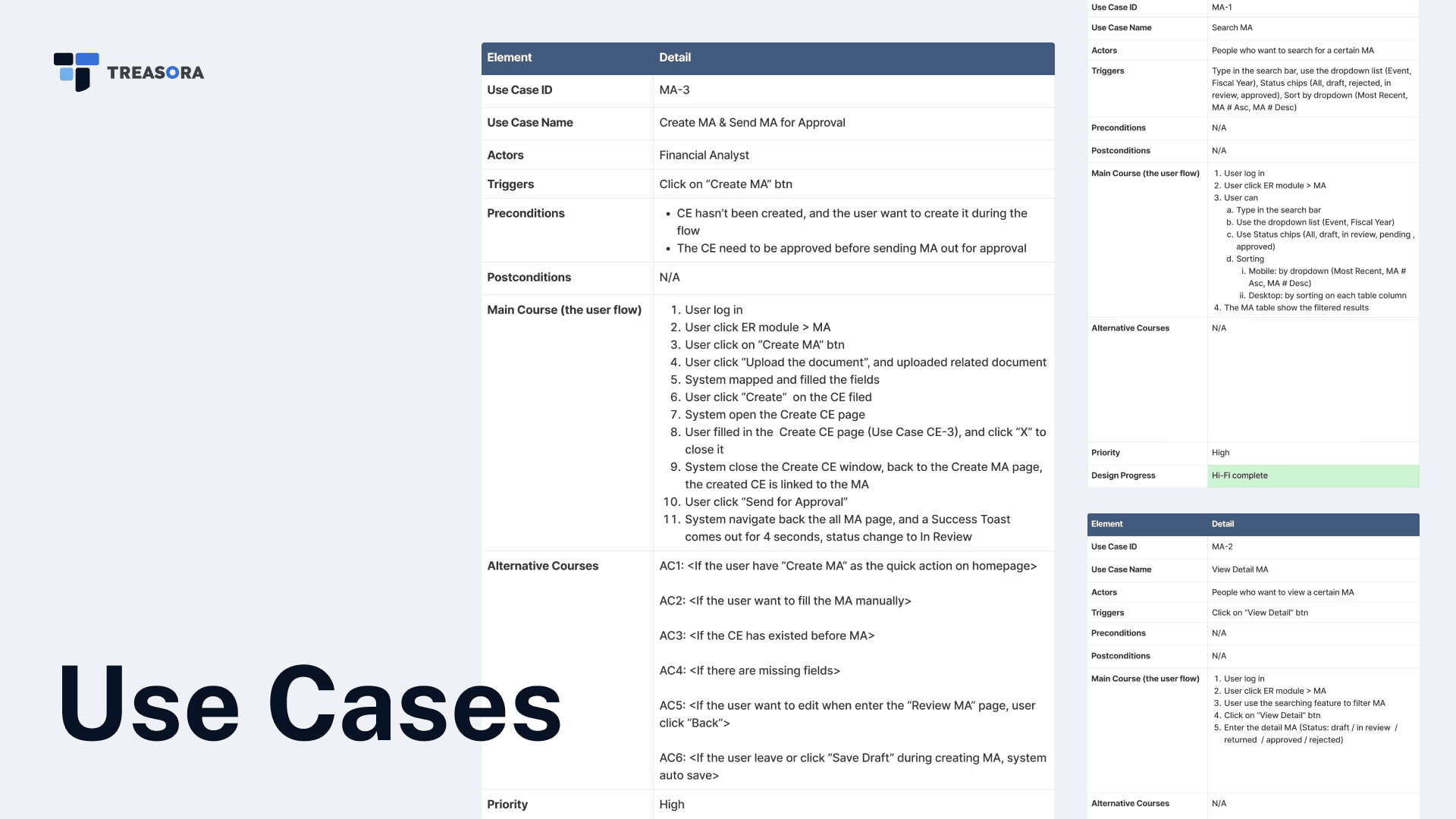
Use case definition and flow mapping
We defined key use cases and user flows (e.g., search, create, approve MA) to determine feature scope and interface requirements

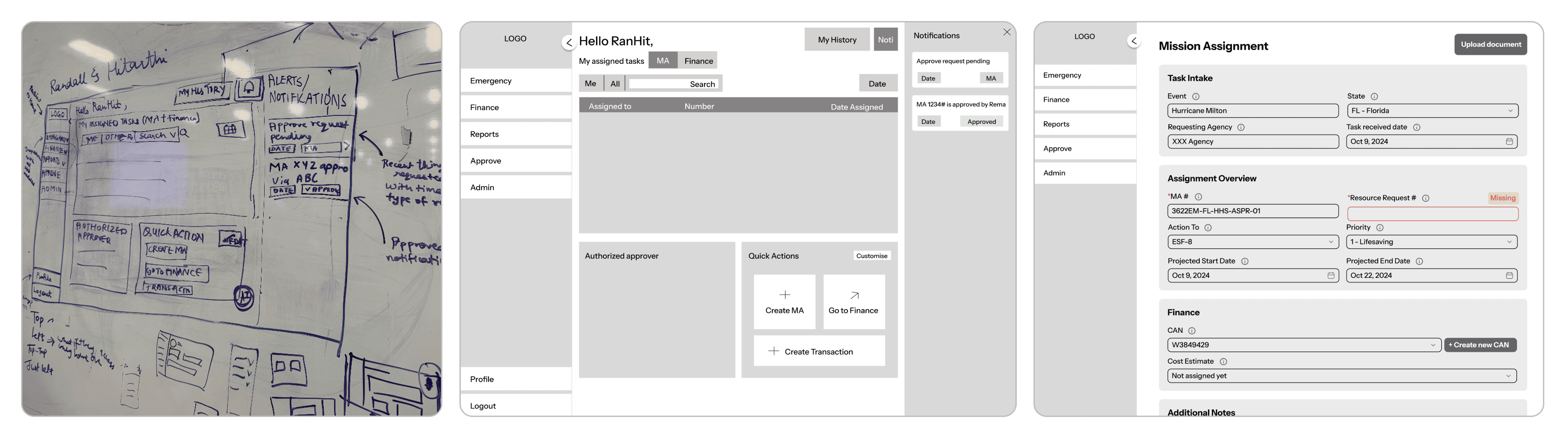
01 Design Strategy: Focus, Iterate, and Scale
To manage the complexity of a multi-role financial system, we focused on key modules first and iterated from desktop wireframes to high-fidelity designs. This structured approach enabled faster feedback, clearer workflows, and scalable system development.


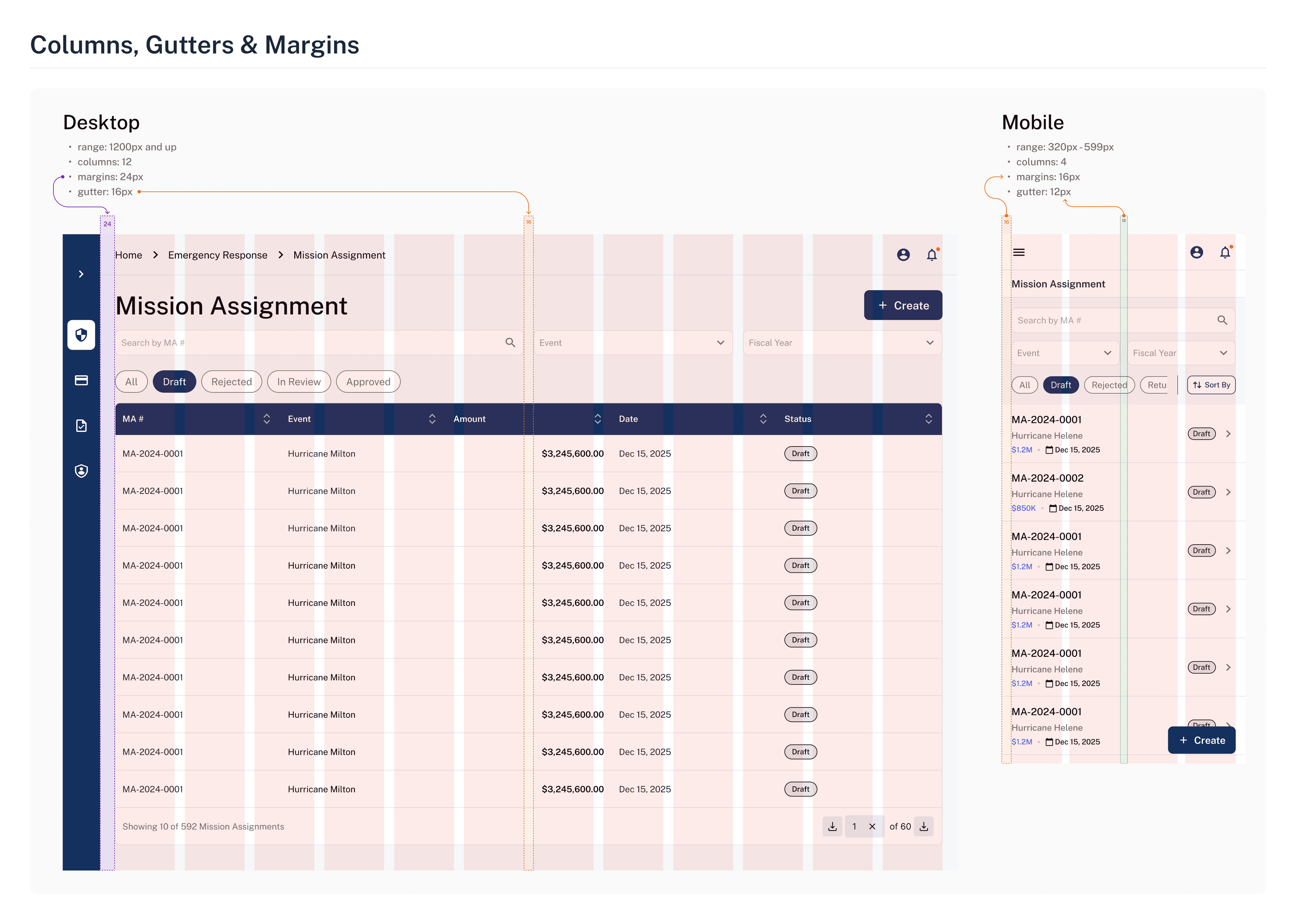
02 Design System & Branding
What we built
What we built
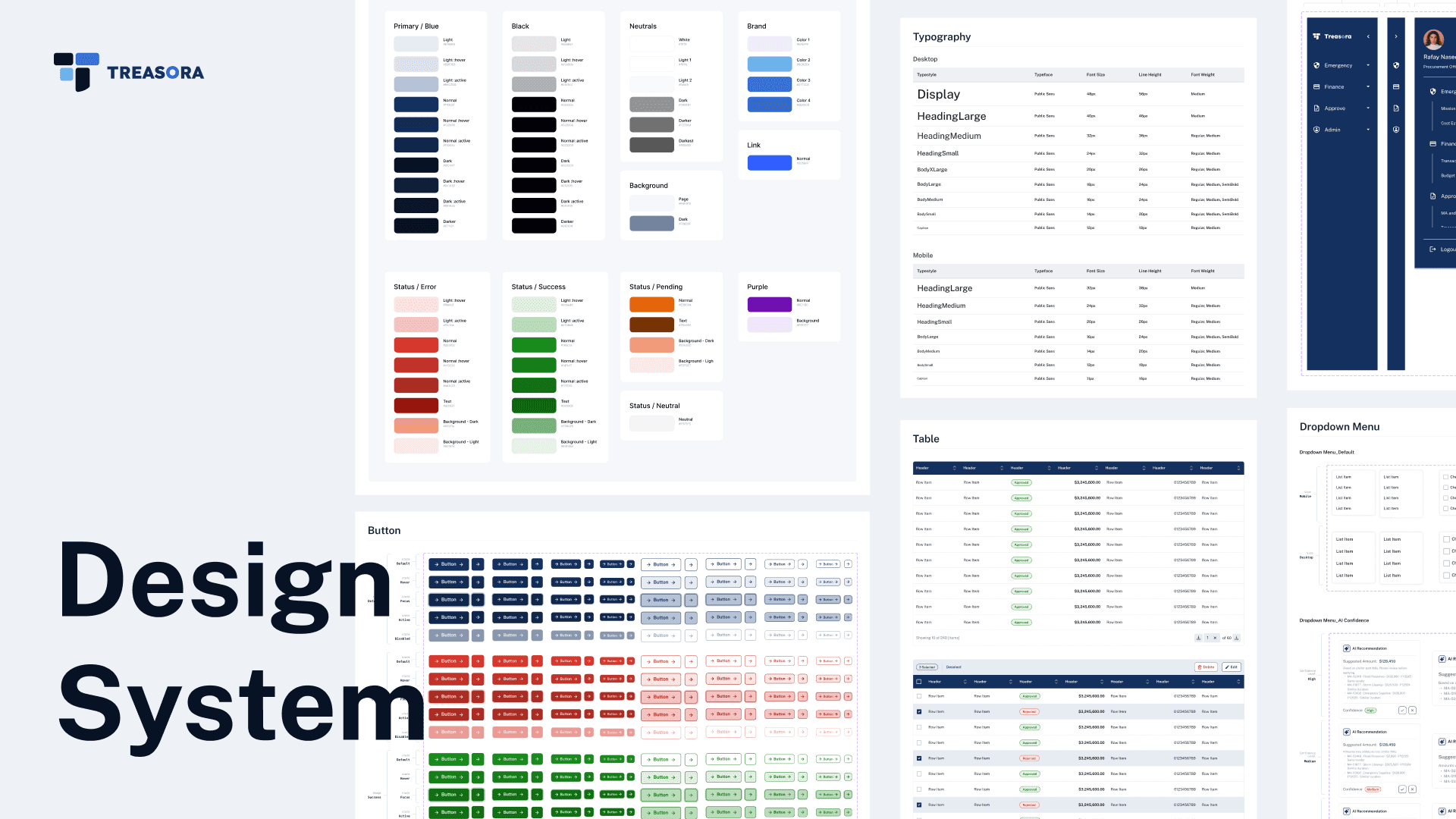
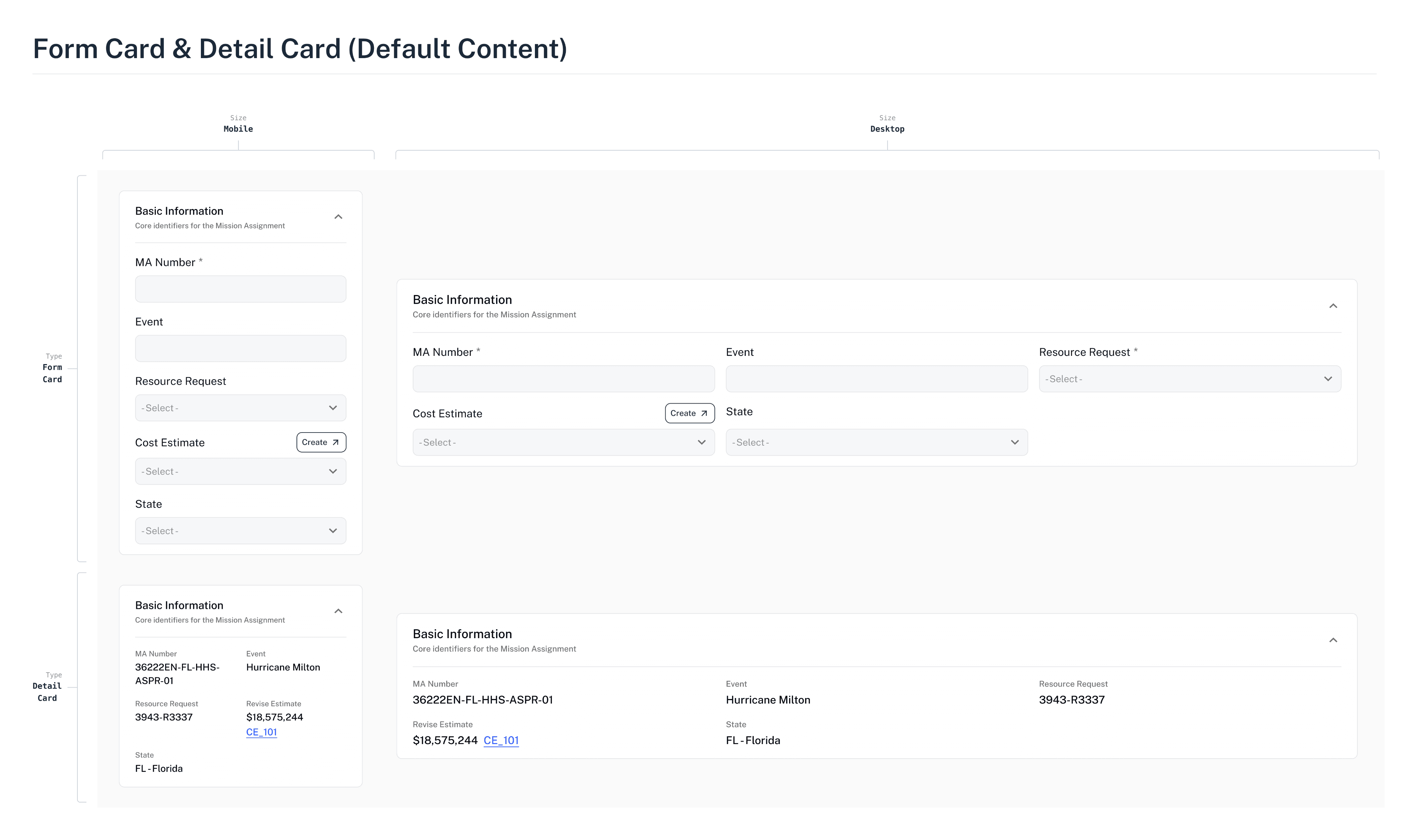
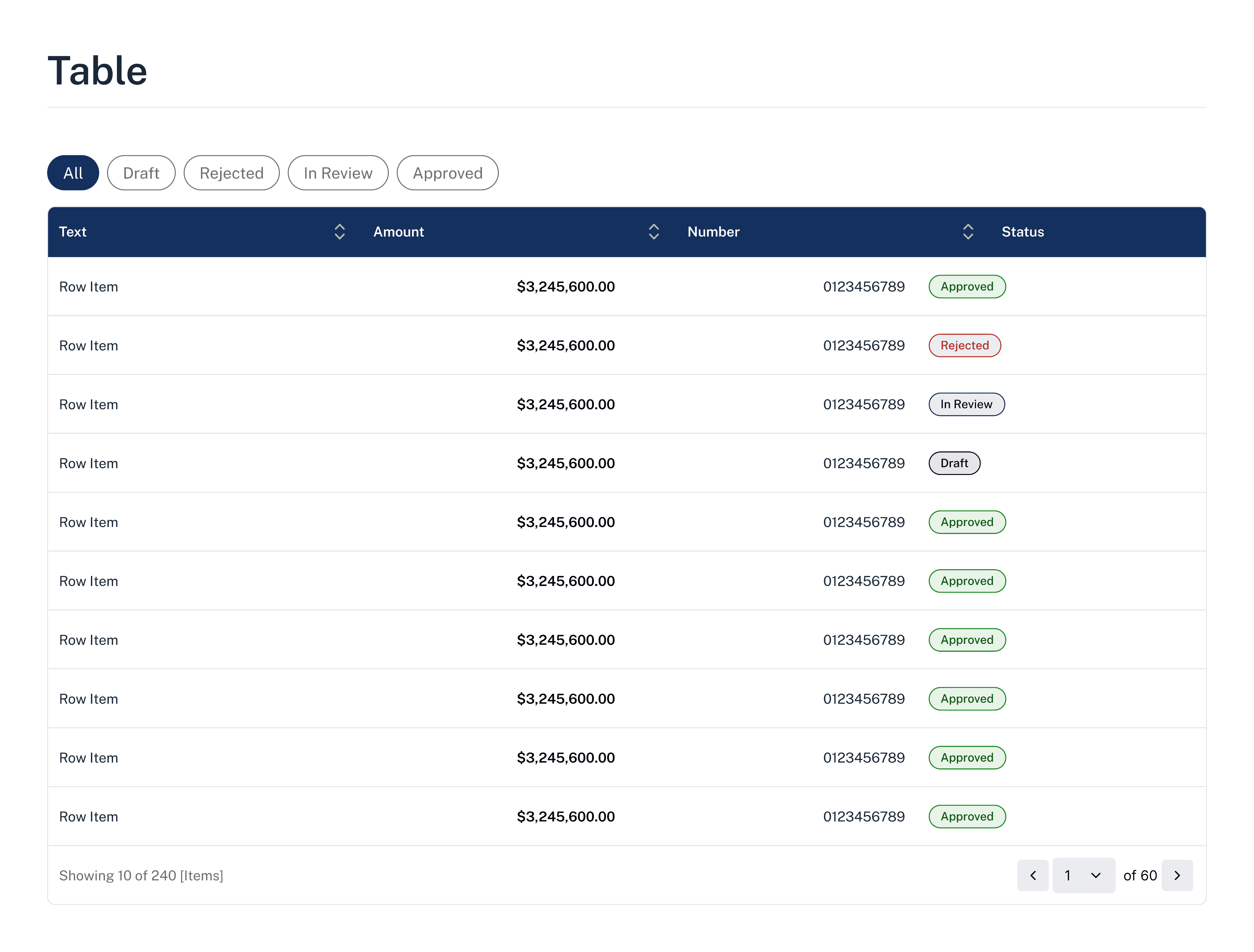
A scalable design system with 40+ reusable components for a data-heavy, multi-role platform
Core components including tables, forms, and navigation to support complex workflows
Consistent design patterns across desktop and mobile
Product identity including naming and logo
A scalable design system with 40+ reusable components for a data-heavy, multi-role platform
Core components including tables, forms, and navigation to support complex workflows
Consistent design patterns across desktop and mobile
Product identity including naming and logo
How we approached it
Design system
Design system
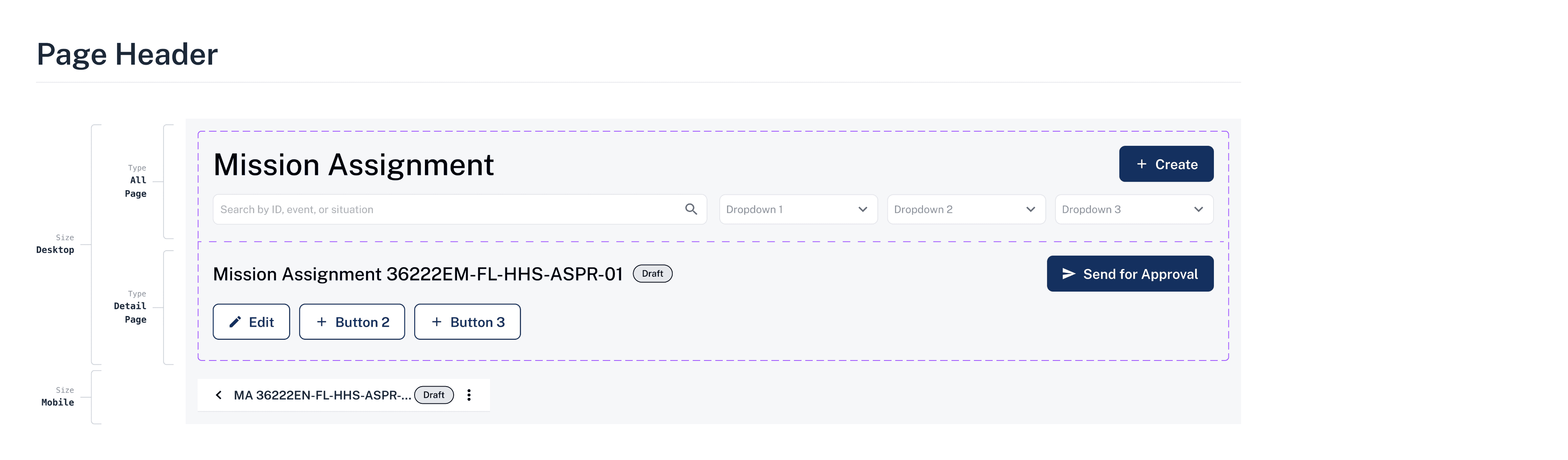
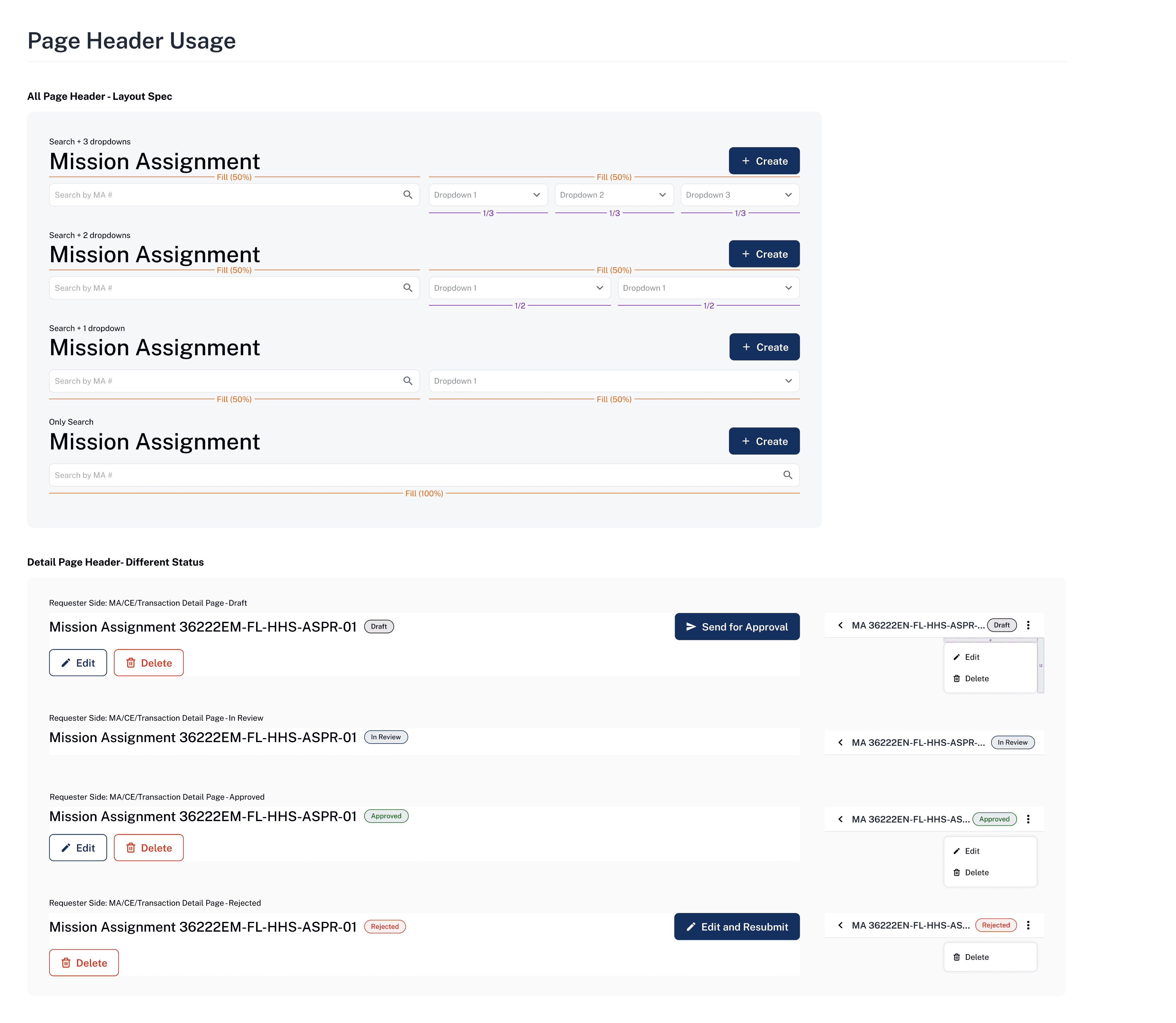
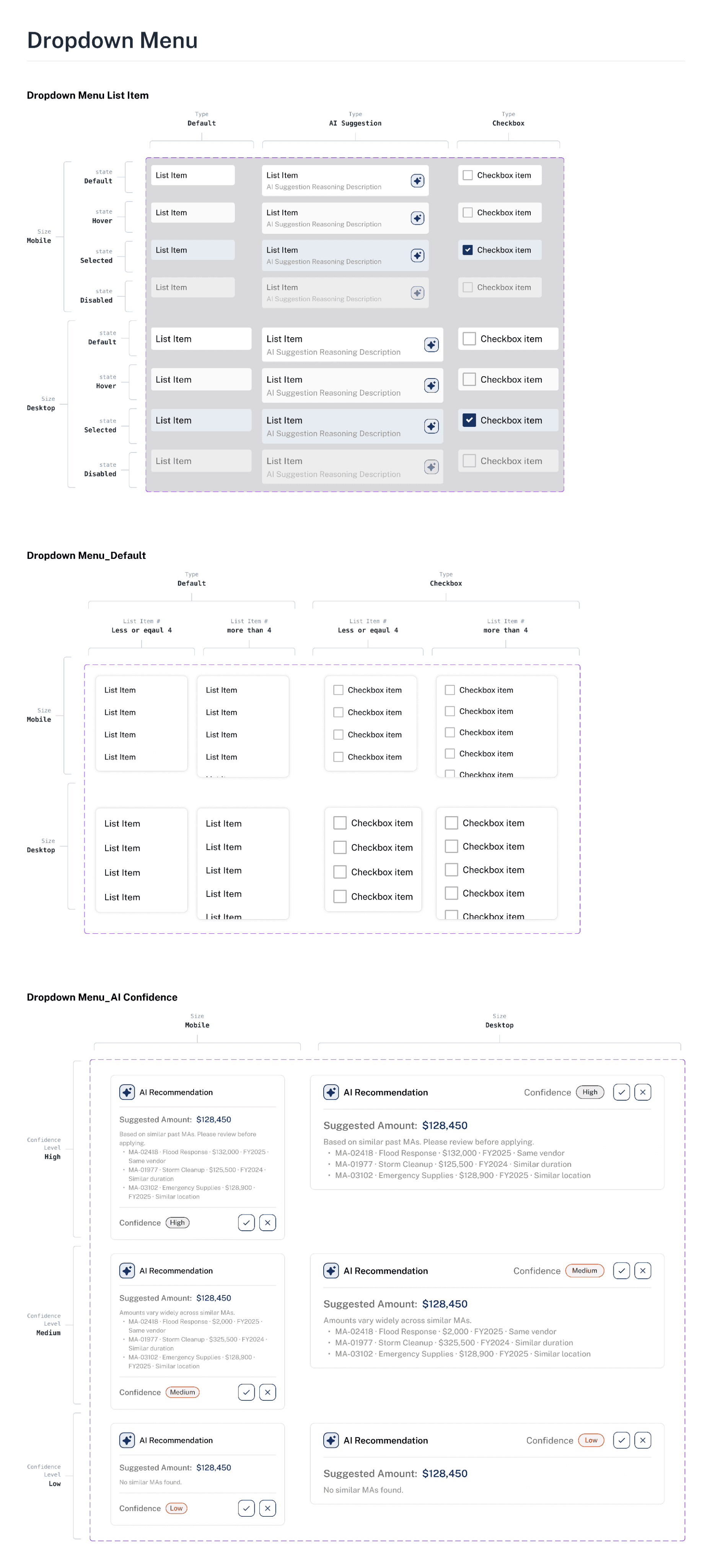
Built reusable components with clearly defined interaction states (e.g., default, hover, focus, disabled) and workflow states (e.g., approval stages, filtering), ensuring consistency across modules and devices
UI specification for handoff
Defined layout rules and interaction patterns (e.g., flexible page header configurations) to support different data scenarios and ensure clear development handoff


03 Hi-Fidelity Screens of Key Workflows
What we made
What we made
Designed 19 end-to-end workflows structured by use cases (e.g., Create MA & CE, Approval, Transaction)
A prototype demonstrating multi-role collaboration in real-world scenarios
Designed 19 end-to-end workflows structured by use cases (e.g., Create MA & CE, Approval, Transaction)
A prototype demonstrating multi-role collaboration in real-world scenarios
How we approached it
Use case–based structuring
Organized screens and flows around key user actions across roles
Scenario-driven prototyping
Simulated real emergency situations (e.g., hurricane response) to validate end-to-end interactions
Scenario
Scenario
After a hurricane hits Florida, the state government receives a Mission Assignment (MA) to initiate emergency response efforts.
The process begins with defining the response scope and estimating costs, followed by multi-level approvals to authorize funding. Once approved, procurement teams execute transactions, which are again reviewed to ensure compliance and budget control.


Financial Analyst
Create MA&CE, Send for Approval
Defines the emergency response scope and prepares cost estimates, then submits for approval to initiate funding.


MA/CE Approvers


Finance Director (Fund Certifier)
MA&CE Approval [e.g. Reject]
Reviews the proposed scope and budget, approving funding to proceed with execution.


Requester (Procurement)
Create Transaction, Send for Approval
Executes approved plans by creating transactions for goods and services, then submits for approval.


Transaction Approvers


Finance Director (Fund Certifier)
Transaction Approval [e.g. Approve]
Validates spending requests to ensure compliance with policies and available budget before execution.
04 AI-Assisted Decision Making
We designed AI support across roles and decision contexts, ensuring it fits naturally into existing workflows without disrupting user control.
AI Across Roles
AI Across Roles
Financial Analyst
Uses AI to estimate costs and validate submissions before approval
MA/CE & Transaction Approvers
Leverage AI summaries to review risks and support decision-making
Requester (Procurement)
Receives AI suggestions for classification and validation before submission
Financial Analyst
Uses AI to estimate costs and validate submissions before approval
MA/CE & Transaction Approvers
Leverage AI summaries to review risks and support decision-making
Requester (Procurement)
Receives AI suggestions for classification and validation before submission

Designing Trustworthy AI Interactions
We tested the system with 6 participants intentionally recruited across different levels of financial expertise, InCEP familiarity, and technical comfort, from seasoned analysts to first-time users with no financial planning background.
Testing focused on four key tasks covering the full approval workflow: creating a Mission Assignment, creating a Cost Estimate, approving the estimate, and creating and approving a Transaction.
This shift creates an opportunity to design a scalable financial system that supports emergency operations at the state level.
Insight 01 — Users Didn’t Recognize AI-Assisted Features
Problem
Problem
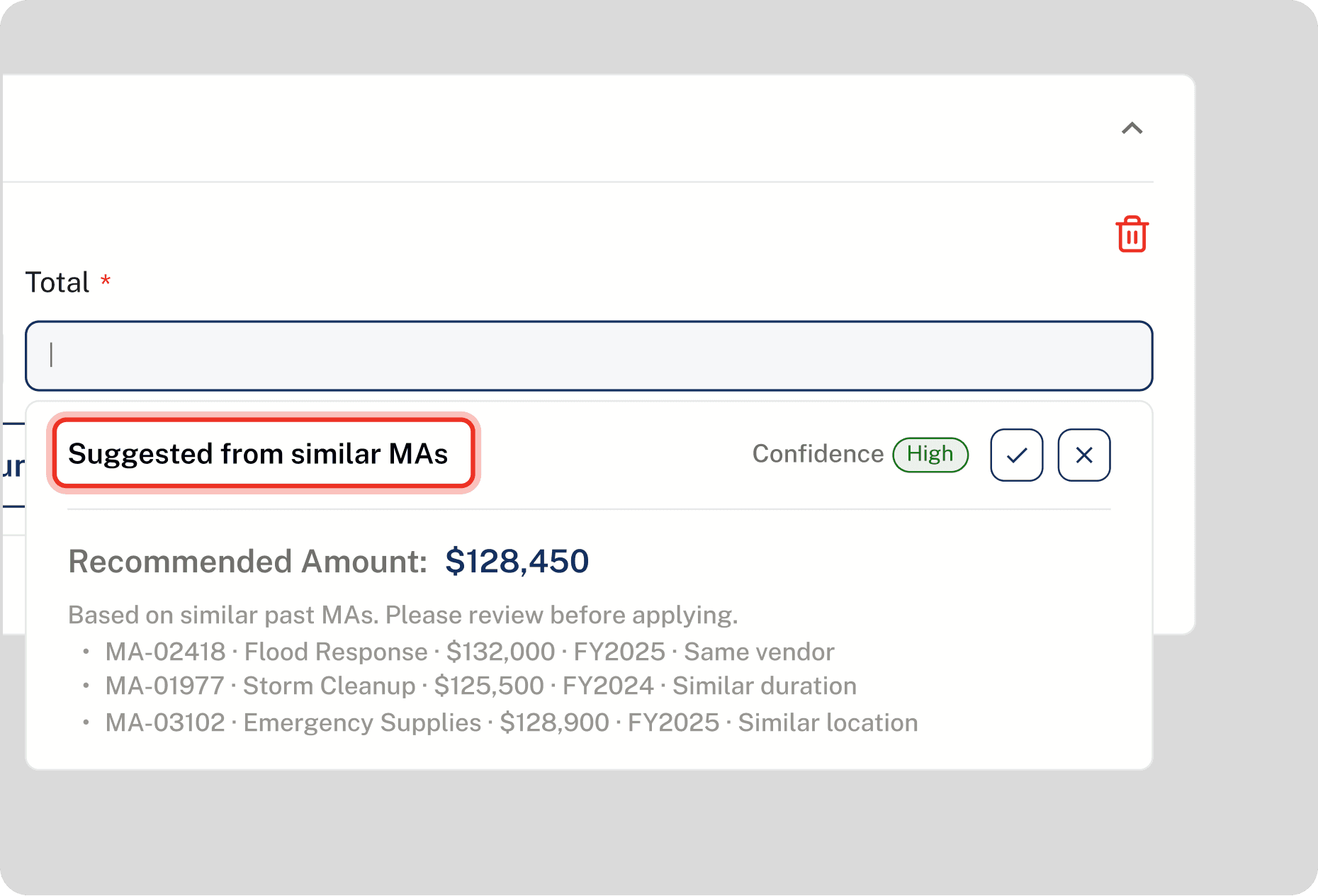
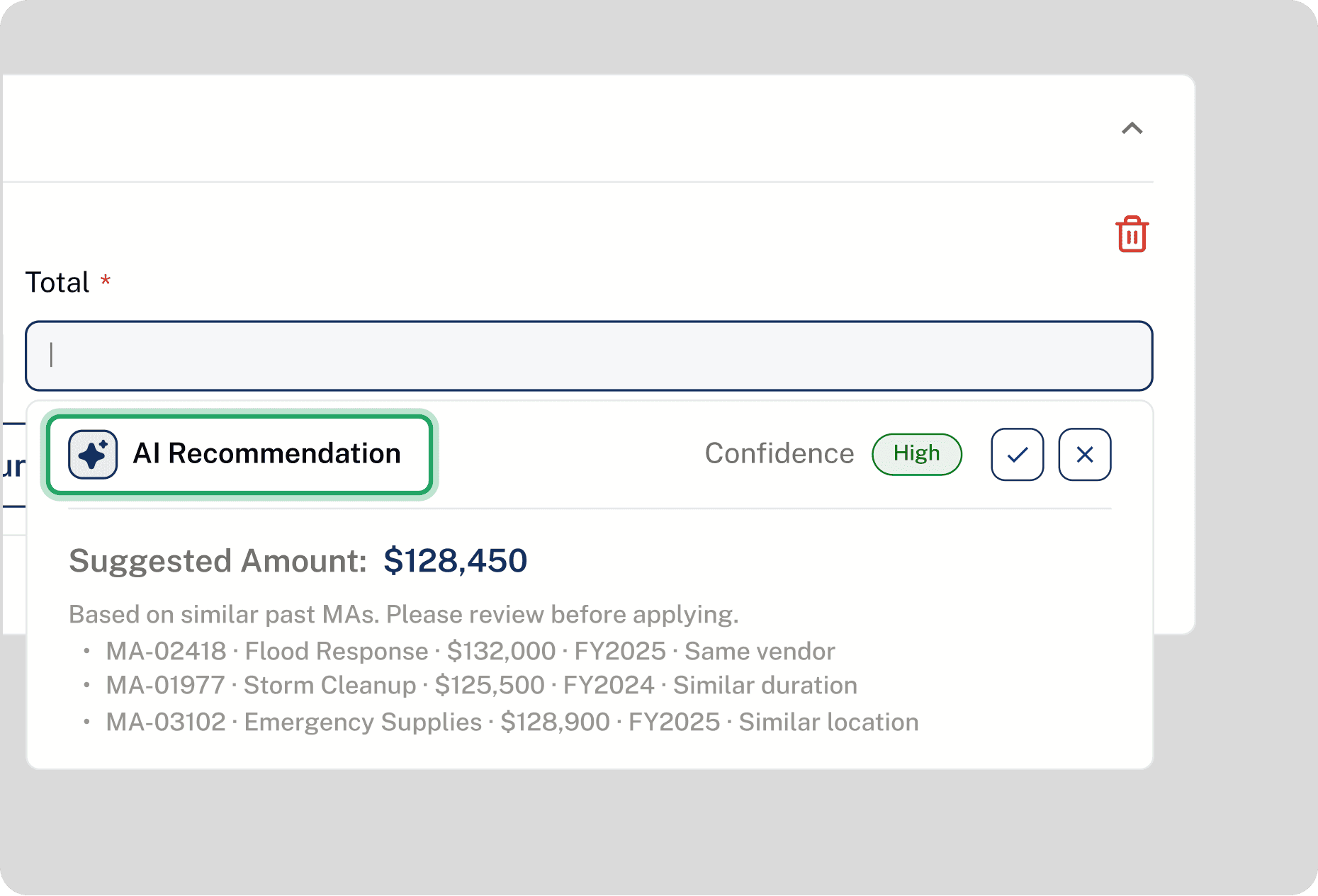
Without clear AI indicators such as icons or explicit AI labeling, the recommendations felt easy to overlook or interpret as regular system content.


Iteration
Iteration
We introduced a consistent AI icon and explicit AI labeling across all AI-assisted interactions in Treasora.


Insight 02 — AI Review Was Too Hidden
Problem
Problem
AI Review was useful, but hard to discover and connect back to related fields due to the hidden button and modal overlay.
Iteration
Iteration
We moved AI findings directly into the page layout and linked each issue to its related field using a “jump-to-field” interaction.
Insight 03 — Auto-Filling Felt Too Aggressive
Problem
Problem
Automatically filling dropdown values through an AI button reduced users’ sense of control.
Iteration
Iteration
Instead of auto-filling, AI-recommended options are now prioritized within dropdown menus, allowing users to review and choose naturally.
4. Project Details
01 Understanding Emergency Financial Workflows
What we learned
Emergency financial workflows are structured around three core entities: Mission Assignment (MA), Cost Estimate (CE), and Transaction
Cost Estimates define how funding is allocated, and must be approved before any spending can occur
Approval is embedded throughout the workflow, governing both funding decisions and actual spending
How we approached it
Workflow decomposition
We broke down complex emergency financial processes into key stages (MA, CE, Transaction), translating domain knowledge into a clear, designable structure

02 Understanding Users & Roles
What we learned
Financial Analysts initiate Mission Assignments and Cost Estimates in the planning stage, while Requesters manage transactions during execution
Different types of approvers are involved at each stage, depending on the scope and financial impact
A final approver provides oversight, ensuring overall financial integrity and compliance
How we approached it
Core role definition and relationship mapping
We simplified complex stakeholder roles into a clear set of core actors and defined how they interact across approval and workflow stages

03 Defining the MVP Scope
What we learned
We defined a desktop-first MVP for validation and pitching, with mobile web as a secondary support for on-site scenarios
The MVP is structured into four core modules: Emergency Response, Finance, Approval, and Admin
The system reflects the financial workflow from planning (MA & CE) to execution (transactions)
Role-based access ensures users interact only with relevant data and actions, supporting scalability across organizations
How we approached it
Information architecture and role-based access
We organized modules and defined access based on user roles, aligning system structure with real-world responsibilities
Use case definition and flow mapping
We defined key use cases and user flows (e.g., search, create, approve MA) to determine feature scope and interface requirements

01 Design Strategy: Focus, Iterate, and Scale
To manage the complexity of a multi-role financial system, we focused on key modules first and iterated from desktop wireframes to high-fidelity designs. This structured approach enabled faster feedback, clearer workflows, and scalable system development.


02 Design System & Branding
What we built
A scalable design system with 40+ reusable components for a data-heavy, multi-role platform
Core components including tables, forms, and navigation to support complex workflows
Consistent design patterns across desktop and mobile
Product identity including naming and logo
How we approached it
Design system
Built reusable components with clearly defined interaction states (e.g., default, hover, focus, disabled) and workflow states (e.g., approval stages, filtering), ensuring consistency across modules and devices
UI specification for handoff
Defined layout rules and interaction patterns (e.g., flexible page header configurations) to support different data scenarios and ensure clear development handoff


03 Hi-Fidelity Screens of Key Workflows
What we made
Designed 19 end-to-end workflows structured by use cases (e.g., Create MA & CE, Approval, Transaction)
A prototype demonstrating multi-role collaboration in real-world scenarios
How we approached it
Use case–based structuring
Organized screens and flows around key user actions across roles
Scenario-driven prototyping
Simulated real emergency situations (e.g., hurricane response) to validate end-to-end interactions
Scenario
After a hurricane hits Florida, the state government receives a Mission Assignment (MA) to initiate emergency response efforts.
The process begins with defining the response scope and estimating costs, followed by multi-level approvals to authorize funding. Once approved, procurement teams execute transactions, which are again reviewed to ensure compliance and budget control.


Financial Analyst
Create MA&CE, Send for Approval
Defines the emergency response scope and prepares cost estimates, then submits for approval to initiate funding.

MA/CE Approvers

Finance Director (Fund Certifier)
MA&CE Approval [e.g. Reject]
Reviews the proposed scope and budget, approving funding to proceed with execution.

Requester (Procurement)
Create Transaction, Send for Approval
Executes approved plans by creating transactions for goods and services, then submits for approval.

Transaction Approvers

Finance Director (Fund Certifier)
Transaction Approval [e.g. Approve]
Validates spending requests to ensure compliance with policies and available budget before execution.
04 AI-Assisted Decision Making
We designed AI support across roles and decision contexts, ensuring it fits naturally into existing workflows without disrupting user control.
AI Across Roles
Financial Analyst
Uses AI to estimate costs and validate submissions before approval
MA/CE & Transaction Approvers
Leverage AI summaries to review risks and support decision-making
Requester (Procurement)
Receives AI suggestions for classification and validation before submission

Designing Trustworthy AI Interactions
We tested the system with 6 participants intentionally recruited across different levels of financial expertise, InCEP familiarity, and technical comfort, from seasoned analysts to first-time users with no financial planning background.
Testing focused on four key tasks covering the full approval workflow: creating a Mission Assignment, creating a Cost Estimate, approving the estimate, and creating and approving a Transaction.
This shift creates an opportunity to design a scalable financial system that supports emergency operations at the state level.
Insight 01 — Users Didn’t Recognize AI-Assisted Features
Problem
Without clear AI indicators such as icons or explicit AI labeling, the recommendations felt easy to overlook or interpret as regular system content.

Iteration
We introduced a consistent AI icon and explicit AI labeling across all AI-assisted interactions in Treasora.


Insight 02 — AI Review Was Too Hidden
Problem
AI Review was useful, but hard to discover and connect back to related fields due to the hidden button and modal overlay.
Iteration
We moved AI findings directly into the page layout and linked each issue to its related field using a “jump-to-field” interaction.
Insight 03 — Auto-Filling Felt Too Aggressive
Problem
Automatically filling dropdown values through an AI button reduced users’ sense of control.
Iteration
Instead of auto-filling, AI-recommended options are now prioritized within dropdown menus, allowing users to review and choose naturally.
5. Reflection & Learning
1
1
1
Designing for Daily Operational Use
This project changed how I think about product design in enterprise systems. Unlike consumer products that often focus on engagement or visual novelty, the priority here was designing tools people rely on every day. Success depended on reducing friction, supporting decision-making, and helping different roles work more efficiently together.
2
2
2
Communicating with Non-Design Stakeholders
Working with non-design stakeholders also reshaped how we communicated design decisions. Early feedback was often broad or solution-oriented, so we used multiple wireframe directions, structured meeting materials, and workflow-based discussions to better uncover priorities and align expectations.
3
3
3
Designing AI That Fits Existing Workflows
Designing AI interactions for enterprise workflows taught me that visibility alone is not enough. AI features need to feel contextual, understandable, and non-disruptive. Through testing, we learned that users preferred AI as guidance and recommendation rather than automation that removed their sense of control.


其他專案
其他專案
其他專案
其他專案